
29th July 2026
The Curious Incident of the Dog in the Night Time
Chesil Theatre (Winchester Dramatic Society), Chesil Theatre, Winchester
 Show Reports
Whose Life Is it Anyway
Show Reports
Whose Life Is it Anyway
This play by Brian Clark is set in 1979 and is adapted from his 1972 television play. It was first performed at the Greenwich Theatre in south-east London before moving to the Mermaid and then the Savoy. It transferred to Broadway in 1979. The plot involves a sculptor who has been paralysed in a car accident. The theme – assisted dying – was unheard of at that time. It is still an extremely contentious issue and very relevant today as the Bill to legalise it is currently before the House of Lords.
Apart from listing the cast and production team, the small A5 programme was very informative, giving us interesting statistics on Assisted Dying as it stands today, which I think is worth noting in the context of the current situation. Apparently 300 million people around the world now have access to some form of assisted dying, including 9 European countries, Australia, New Zealand, Canada and 10 States in the USA. The UK is very much behind the curve on the issue. In this country, with the absence of any legal alternative, up to 650 dying or severely disabled people take their own life every year and up to 10 times that number attempt to do so and fail. The proposed Bill now before the House of Lords would not apply to a severely disabled person like Ken in the play. He would still be forced to prove himself capable of rational decision and suffer a slow and painful death by the withdrawal of medical intervention, rather than a brief, controlled, painless assisted death.
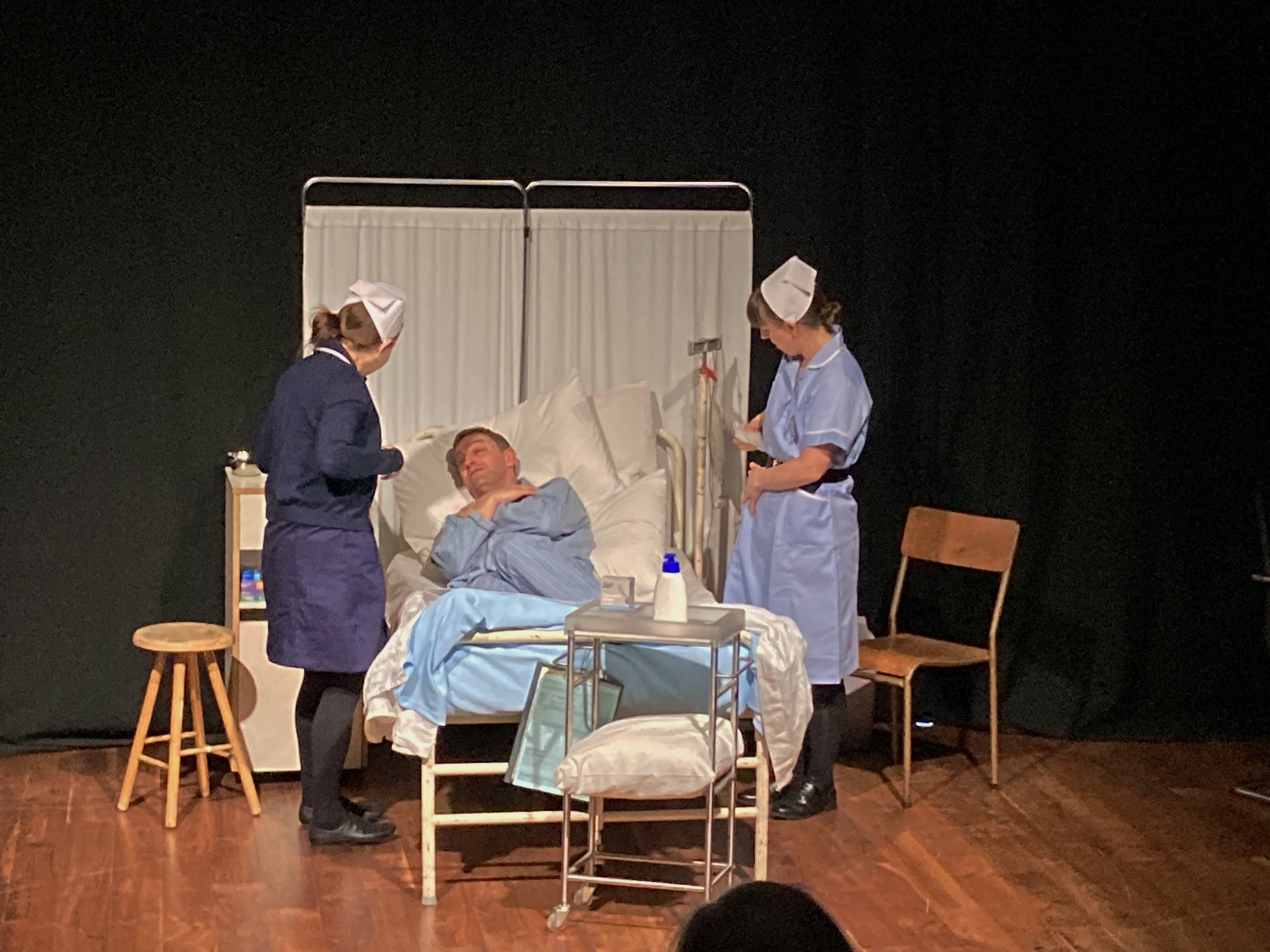
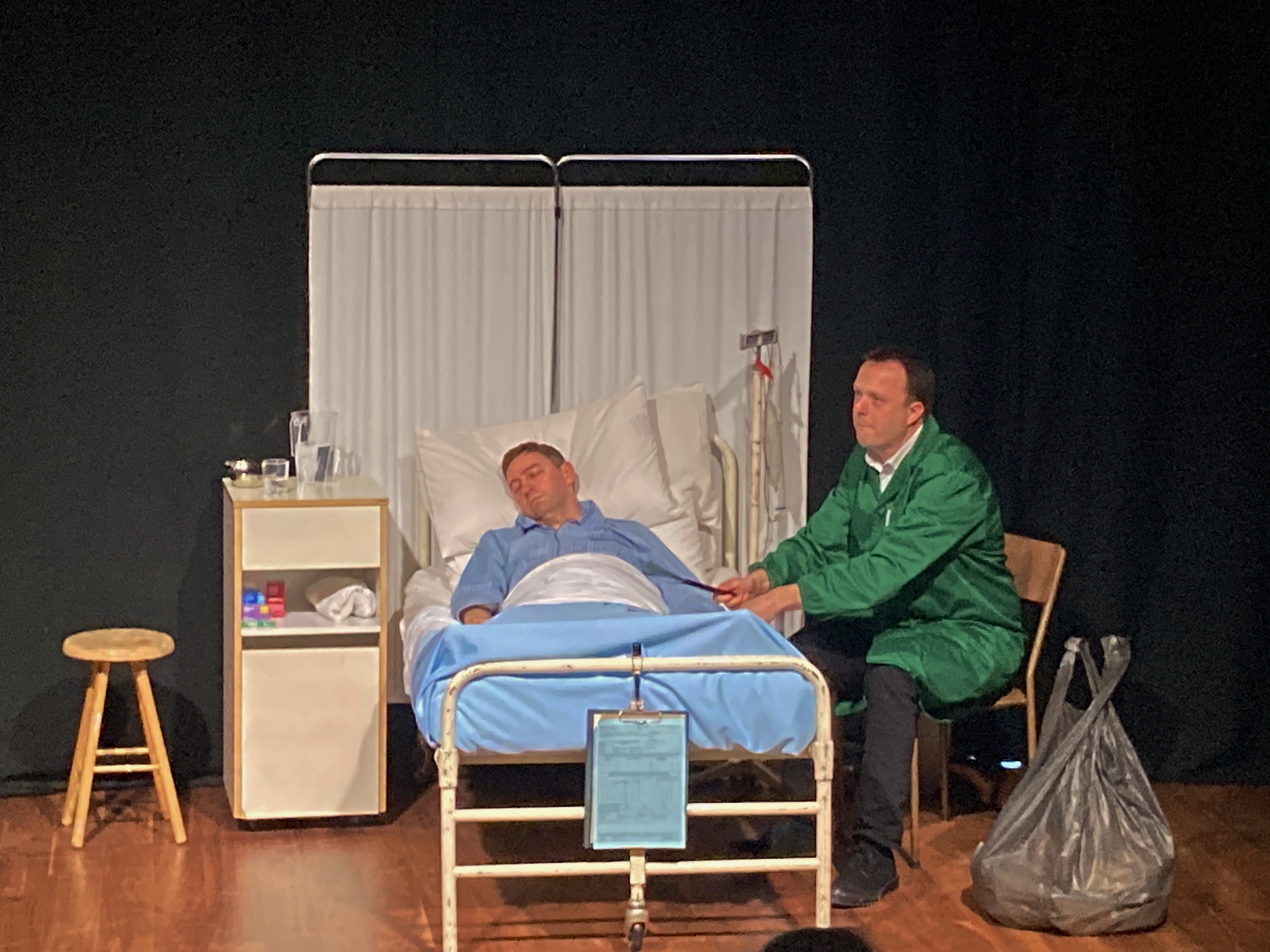
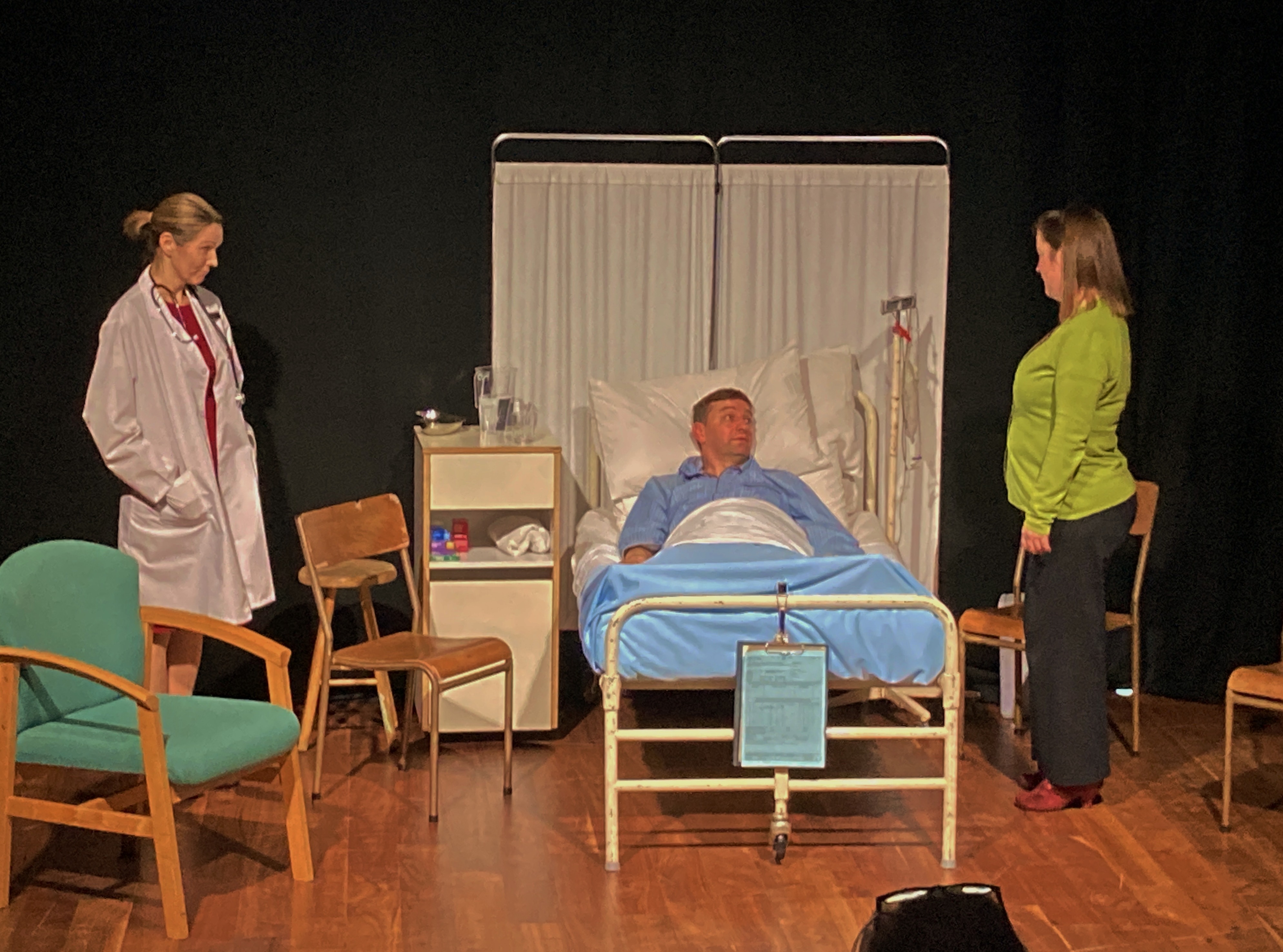
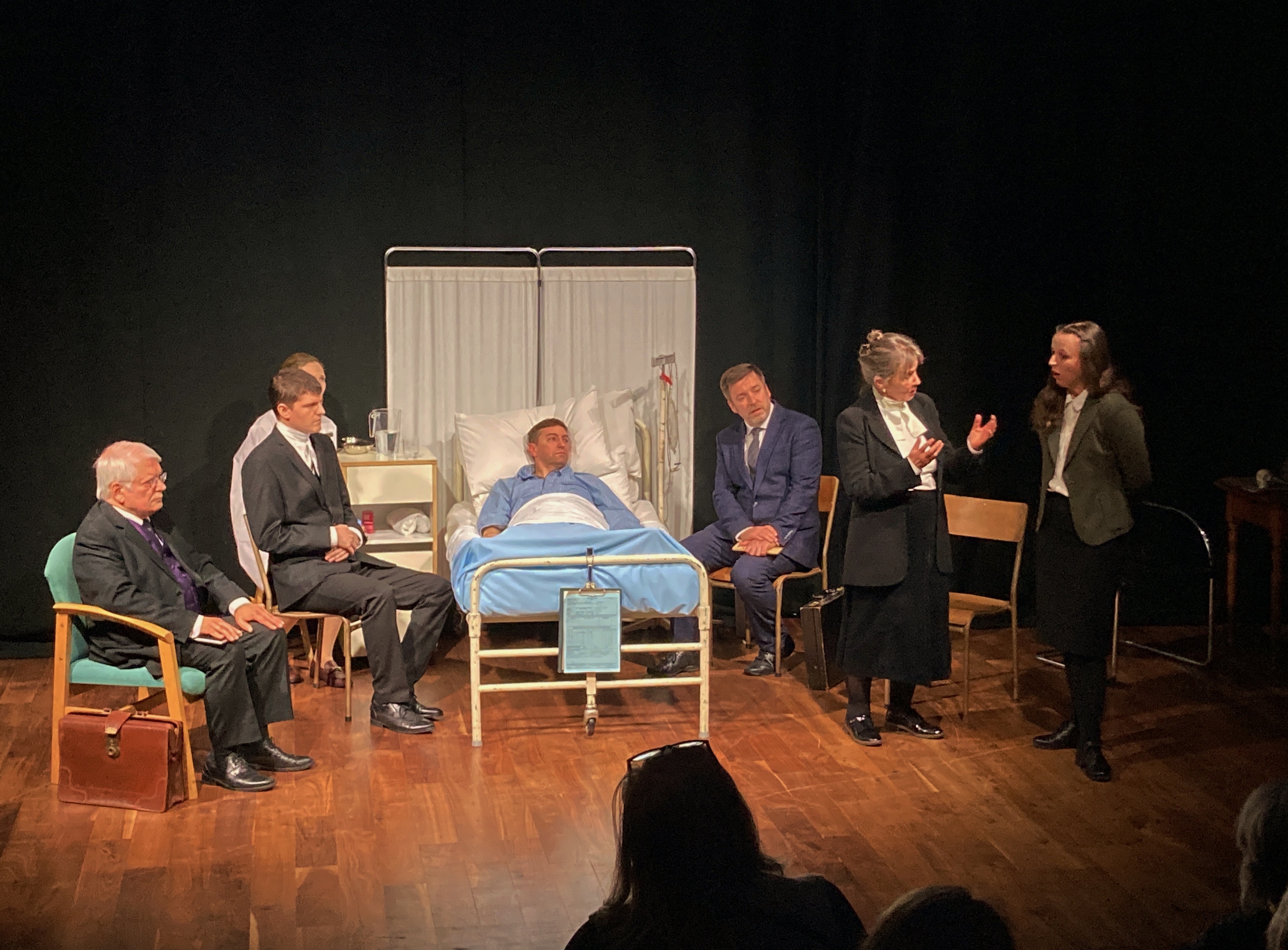
The minimal set consisted of a hospital bed in the centre occupied by the main character, the nurses’ station on one side and the consultants’ office on the other. The cast cleverly moved from one to the other as though they were going through doors and turning corners along the corridor. The furniture was of the era – old fashioned hospital bed, tubular steel chairs. The genuine, creaky trolley was pushed in and out and the various feeding receptacles looked pretty authentic. Lighting was simple, effectively switching between the three main rooms where the action was taking place. Costumes were uncomplicated and in keeping with the period
The show opened with the paralysed patient Ken Harrison (Tony Carpenter) dozing in bed. Sister Anderson (Lexy Gold) at her station next door switches on her radio and gives us a demonstration of some neat moves in time to the music, appropriately Staying Alive, Ken describing her as a ‘disco diva’ whom he can only hear as she is out of sight. She is clearly fond of Ken and treats him with good-humoured respect and gentleness, helped by junior nurse Sadler (Kerry Bolland) whose cheerful banter with Ken, revealing her first name which prompts him to tell her off jokingly for being unprofessional, brings a measure of normality to his situation. Carpenter played the role of Ken with calm dignity, quiet humour and a philosophical acceptance of his situation before taking the decision to insist on his discharge which would inevitably lead to his death. Not easy to perform such a static part but he carried it off well and kept us interested and engaged.
The arrival of French orderly Jean (J P Judson) lifts the atmosphere. He proceeds to shave Ken while keeping up a breezy conversation peppered with jokes and laughter. Away from the ward, he pursues Nurse Sadler who succumbs to his Gallic charm, for which she is teased by Ken. Judson’s brief appearances were invariably very funny and lightened the atmosphere every time, his genuine French accent and clear diction contrasting with the otherwise rather hushed mood of a hospital ward. His idea of playing the drumsticks on Ken’s inert body was actually quite moving, trying to introduce some fun into his miserable existence, which Ken clearly enjoyed, even if he couldn’t feel it! A strong and entertaining performance. Well done. Dr Scott (Eleanor Shaikh) was plainly sympathetic to Ken’s condition and she supported his wish to be discharged from hospital, arguing his case with the frosty but professional Dr Emerson (Helen Wigram). However, Emerson’s human side shone through at the end after the Judge, Mr Justice Millhouse (Rick Buckman-Drage) ruled in Ken’s favour, by agreeing to switch off his life-support so that he could die in hospital, surrounded by his caring friends, rather than alone having been discharged. Mrs Boyle (Pru Lunberg) and Dr Travers (Jenny Swift) as the patronising social worker and fussy psychiatrist respectively were well cast and convincing in their roles. The latter is brought in to assess whether Ken was of sound mind, enough to decide his own future. She showed a need to be assessed herself with her compulsion to have everything lined up and placed ‘just so’. No wonder Ken lost his patience with her, giving her short shrift.
The scene alongside Ken’s bed with the judge, Eden (Leon Munns) the barrister representing the hospital and expert witness Dr Barr (Kerry Bolland) was well choreographed, persuasive arguments being offered for both sides of the case.
The play was well structured and moved along at a good pace, the cast giving sensitive performances under David Clegg’s skilful direction. The topical theme gave the audience a great deal to think about, given the current state of play surrounding the question of assisted dying as it stands today. Whilst not an “enjoyable” subject, it was an excellent evening’s entertainment. Congratulations to everyone involved.
 |
 |
 |
 |
© NODA CIO. All rights reserved.